
Quick Summary:
Prenatal yoga in Manasquan is a gentle, trimester-adapted practice designed to support expecting moms through the physical and emotional changes of pregnancy. It uses modified poses, breathing techniques, gentle strength work, and supportive props to help with common discomforts such as back pain, swelling, poor sleep, and stress. The article also explains important safety considerations, including getting medical clearance and avoiding poses that may not be suitable during pregnancy.
The guide covers what prenatal yoga looks like during each trimester, what beginners can expect in class, and how prenatal sessions at Inlet Yoga Studio in Manasquan are structured. It also introduces postnatal yoga, explains what to bring to a first class, and answers common questions about starting prenatal yoga, pregnancy-safe poses, frequency, labor preparation, and returning to yoga after birth.
What Is Prenatal Yoga?
Pregnancy changes your body faster than almost anything else you’ll go through, and it’s not always easy to know what kind of movement is actually safe. Your center of gravity shifts, your joints loosen, and aches show up in places that never used to bother you. If you’ve been searching for prenatal yoga in Manasquan, you’re likely looking for a class that meets you where you are, without pushing your body past what feels right for this stage of life.
Prenatal yoga is a form of exercise designed specifically around what a pregnant body needs. It’s slower than a typical flow class, it avoids the poses that carry any real risk, and it gives you tools you’ll actually use during labor and recovery. This guide covers what prenatal yoga in Manasquan looks like in practice, what it can help with, and what you can expect from your first class.
How Is Prenatal Yoga Different From Regular Yoga?
Prenatal yoga is a modified style of yoga built around the physical and emotional changes of pregnancy. The pacing is slower, the poses are adapted for a growing belly, and the instructor is trained to recognize what each trimester requires.
A few things separate it from a regular yoga class:
- Pacing: Classes move gently, with more time spent in each pose and no rushed transitions.
- Poses avoided: Deep belly twists, tight core work, and lying flat on the back for extended periods (after the first trimester) are left out.
- Who it’s for: Anyone from first-time yogis to experienced practitioners, at any stage of a low-risk pregnancy.
If you’ve never set foot in a studio before, this is often the most approachable place to start. It’s also a natural next step if you’ve taken a beginner’s yoga class in the past and want a practice that adapts alongside your changing body.
Is Prenatal Yoga Safe? What to Know Before You Start
For most low-risk pregnancies, prenatal yoga is considered a safe and supportive form of movement, but it’s not something to jump into without a plan.
Before you begin, keep a few things in mind:
- Get clearance from your doctor or midwife first. This matters even if you were active before pregnancy.
- Certain poses are typically avoided, including deep twists, backbends, and anything that puts direct pressure on the belly.
- Lying flat on your back for long stretches is generally discouraged after the first trimester, since it can affect blood flow.
- High-risk pregnancies need extra caution. If you’ve been told to limit activity, talk to your provider before joining any class, prenatal or otherwise.
This article is meant to give general guidance, not medical advice. Every pregnancy is different, and a qualified instructor will always ask about your history and adjust poses to fit your needs rather than applying a one-size-fits-all sequence.
Benefits of Prenatal Yoga by Trimester
What your body needs from a practice changes as pregnancy progresses. A well-run prenatal class adjusts for that instead of running the same sequence every week.
First Trimester: Grounding and Energy
Early pregnancy often brings fatigue, nausea, and a wave of new emotions. First-trimester prenatal yoga leans toward gentle, grounding movement, slow breathing, and poses that ease morning sickness without overexerting a body that’s already working hard.
Second Trimester: Strength and Hip Opening
This is usually when energy returns, which makes it a good window to build strength in the legs, back, and core stabilizers. Hip-opening poses become a bigger focus here, helping prepare the pelvis for the later stages of pregnancy and easing the sciatic discomfort that often starts around this time.
Third Trimester: Labor Prep and Comfort
As your due date gets closer, prenatal yoga shifts toward comfort, breathwork, and poses that support labor prep. Expect more time with props like bolsters and blocks, slower pacing, and breathing techniques you can carry directly into the delivery room.
Common Pregnancy Discomforts Prenatal Yoga Can Help With
Many expecting moms come to prenatal yoga looking for relief from specific discomforts rather than a general fitness goal. The most common ones include:
- Back pain and sciatica: These can become more common during pregnancy as your weight distribution and body alignment change. Prenatal yoga uses gentle, modified movements to support comfort and mobility without pushing the body beyond what feels appropriate for the stage of pregnancy.
- Swelling in the feet and ankles, which gentle inversions and leg elevation can help manage.
- Poor sleep and restlessness, especially in the third trimester when finding a comfortable position gets harder.
- Anxiety around labor and delivery, which breathwork and meditation techniques are designed to ease.
None of these are guaranteed to disappear, but a consistent practice gives your body tools to manage them more comfortably.
What to Expect in a Prenatal Class at Inlet Yoga
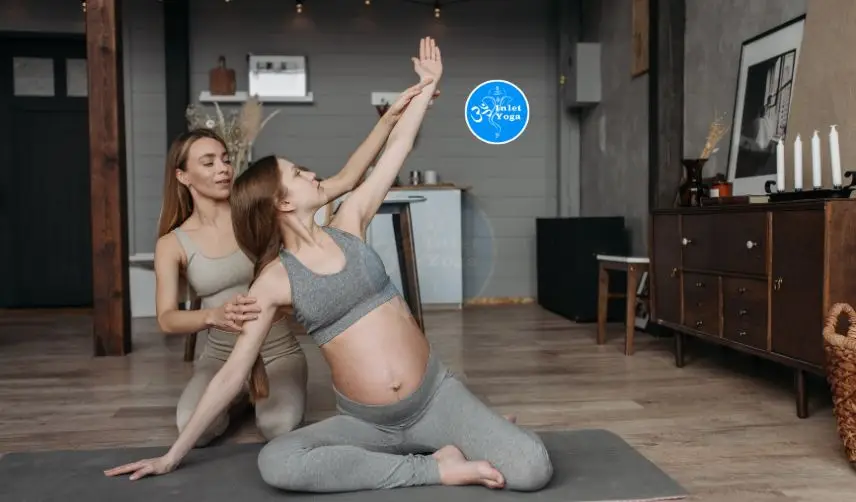
At Inlet Yoga Studio in Manasquan, prenatal and postnatal classes are led by Natalie Lorenzo, an instructor known for her calm, nurturing teaching style. She leads prenatal and postnatal classes designed to support women through the different stages of pregnancy and early motherhood.
A typical class at Inlet Yoga includes:
- A slower pace than the studio’s regular flow classes, with time built in for questions and modifications
- Props like bolsters, blocks, and straps available for every student
- A mix of hip openers, gentle strength work, and breath-focused relaxation
- A small, supportive group setting where it’s normal to see moms at very different stages of pregnancy in the same room
If you’re weighing your options for movement during pregnancy, it can help to see how prenatal classes compare to the rest of the studio’s offerings on the class types page, or to read more about the instructors on the meet the team page. Some moms also prefer starting with a private yoga session before joining a group class, especially if they have specific concerns they want addressed one-on-one first.
Postnatal Yoga: When to Start After Birth
Postnatal yoga picks up where prenatal leaves off, but it’s built around recovery rather than preparation. The focus shifts to rebuilding core strength gently, supporting the pelvic floor, and easing back into movement after birth.
There’s no single timeline that fits everyone. Most providers recommend waiting for a postpartum checkup and formal clearance before returning to any structured exercise, which for many moms falls somewhere between four and eight weeks after a vaginal birth, and longer after a C-section. Once cleared, postnatal yoga offers a low-impact way to reconnect with your body without rushing the process.
What to Bring and Wear to Your First Prenatal Class
Showing up prepared makes the first class feel a lot less intimidating.
- Wear comfortable, stretchy clothing you can move in easily, like maternity leggings or a loose tank.
- Bring water and a light snack if your class runs during a time you’d normally eat.
- Most props are provided in the studio, but you’re welcome to bring your own mat if you have a preference.
- Arrive a few minutes early, so your instructor can ask about your due date, trimester, and any concerns before class starts.
Join a Prenatal Yoga Class at Inlet Yoga
Pregnancy asks a lot of your body, and having a space built specifically for that stage of life makes a real difference. Inlet Yoga Studio in Manasquan offers prenatal and postnatal classes led by an instructor who genuinely understands what expecting and new moms need, in a small, welcoming studio setting on the Jersey Shore.
If you’re ready to try a class, check the current class schedule and pricing to find a time that fits, or reach out to the studio directly with any questions about what to expect at your stage of pregnancy.
Ready to experience prenatal yoga in Manasquan for yourself? Explore Inlet Yoga’s class schedule and find a time that works for your stage of pregnancy.
Frequently Asked Questions
Is prenatal yoga safe in the first trimester?
Yes, for most low-risk pregnancies, gentle prenatal yoga is safe in the first trimester. It’s still worth getting clearance from your doctor or midwife first, especially if you had any complications early on.
When should I start prenatal yoga?
You can start at any point in pregnancy once you have medical clearance. Many women begin in the first or second trimester and continue with modifications through the third.
Can beginners join prenatal yoga classes?
Yes. Prenatal yoga is often a good entry point for women who have never practiced yoga before, since the pacing is slower and instructors are used to working with all experience levels.
What poses should I avoid while pregnant?
Deep belly twists, tight core compressions, and extended time lying flat on the back after the first trimester are generally avoided. A qualified prenatal instructor will guide modifications throughout class.
How often should I do prenatal yoga per week?
One to two classes per week is a common starting point, though this depends on your energy levels and your provider’s recommendations.
Is prenatal yoga different from regular yoga?
Yes. It’s slower-paced, avoids certain poses, uses more props for support, and is taught by instructors trained specifically in pregnancy-safe modifications.
Can prenatal yoga help with labor prep?
Many moms find that the breathing techniques and hip-opening poses practiced in prenatal yoga carry directly into labor, particularly in the third trimester.
When can I return to yoga after giving birth?
There’s no single timeline that fits everyone. Most providers recommend waiting for a postpartum checkup and getting clearance before returning to structured exercise. Once cleared, postnatal yoga can offer a gentle way to reconnect with your body without rushing the recovery process.
Do I need my doctor’s approval before starting?
It’s strongly recommended, especially if you have a high-risk pregnancy or any complications. A quick conversation with your provider can confirm it’s a good fit for you.
What should I bring to my first class?
Comfortable, stretchy clothing, water, and an open mind. Most studios, including Inlet Yoga, provide props like bolsters and blocks for prenatal classes.






