Quick Summary
A good yoga certification in New Jersey teaches you more than poses and sequences. It teaches you how to lead a class for people with different levels of experience, physical abilities, and needs. That could mean supporting a nervous first-time student, challenging an experienced practitioner, and offering appropriate options to someone working around a sore shoulder or stiff lower back.
This guide explains what different ability levels can look like in a studio and which skills a yoga certification in New Jersey should help develop, including modifications, prop use, clear cueing, and reading the room. It also explores how Inlet Yoga’s 200-hour training in Manasquan approaches teacher development through its curriculum and faculty experience.
What Yoga Certification Should Prepare You to Do
Picture your first class as a certified teacher. One student is attending for the very first time. Another has practiced for a decade and wants a challenge. A third is working around a sore knee. All three are looking to you for guidance, and your job is to create a class where each person can participate appropriately.
If you are researching yoga certification in New Jersey, this is an important situation to prepare for. Learning poses is one part of teacher training. Learning how to communicate with students who have different experience levels and needs is another.
This article explores what teaching different ability levels involves, which skills to look for in a training program, and how Inlet Yoga in Manasquan approaches teacher education.
Why Ability Levels Are the Real Test of Yoga Certification in New Jersey
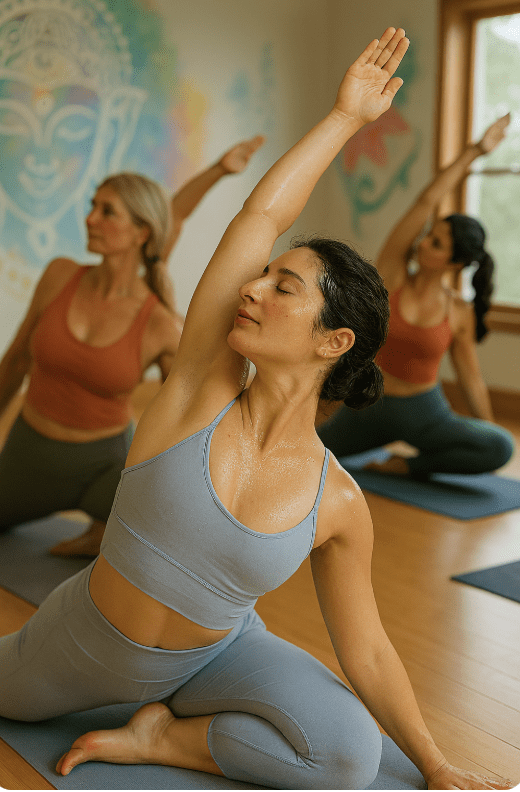
In a studio class, students may arrive with different levels of experience, physical abilities, and expectations. A beginner may need more time to understand a pose, while an experienced student may benefit from a more detailed alignment cue. Another student may need a gentler option on a particular day.
A teacher’s job is to offer appropriate ways to participate without making anyone feel singled out for choosing a different version of a pose.
That is why, when comparing yoga certification in New Jersey programs, it helps to look beyond the list of poses covered. Consider how a training prepares you to communicate clearly, offer variations, and respond thoughtfully to the people in front of you. Completing a certificate is one milestone. Developing the judgment to guide a varied class takes practice.
What Different Ability Levels Actually Look Like in a Studio
Ability is not a single scale running from beginner to advanced. It can reflect experience, strength, flexibility, confidence, previous injuries, and how someone feels on a particular day.
The Brand-New Student
New students may not know where to place their hands, whether it is fine to look around, or how to use a block. They often benefit from plain language, clear demonstrations, and reassurance that resting is a valid choice.
A teacher should explain the purpose of a pose without overwhelming students with too many instructions at once. Simple cues and manageable options can help beginners build confidence.
The Experienced Student
Long-time students may know the sequence but still benefit from careful guidance. Familiarity with a pose does not always mean the student is using an appropriate variation or paying attention to how their body feels.
Instead of assuming that experienced students always need a harder pose, a teacher can offer more detailed alignment cues, encourage mindful transitions, or invite students to explore a variation when it suits their practice.
The Student Who Needs Additional Support
Older adults and students managing physical limitations may benefit from seated options, props, or supported variations. The right approach depends on the individual, the class, and the teacher’s training.
Inlet Yoga offers chair yoga and therapeutic yoga, which can help prospective teachers explore how supported practices differ from a general group class.
Teachers also need to recognize the limits of their role. A yoga teacher is not a substitute for a healthcare professional. When a student has a medical condition, ongoing pain, or concerns about a particular movement, encourage them to seek appropriate healthcare guidance and avoid making medical claims or prescribing treatment.
The National Center for Complementary and Integrative Health explains that yoga is generally safe for healthy people when practiced appropriately, while injuries can still occur. Responsible teaching includes offering suitable options, respecting individual limits, and knowing when a student may need professional advice.
Skills a Yoga Certification in New Jersey Should Teach You
A strong teacher-training program should help you develop practical skills for guiding students with different needs. Here are four areas worth exploring when comparing programs.
Teaching in Layers
One useful approach is to offer variations without presenting one as better than another. Consider a crescent lunge. You might invite students to keep their back knee on a folded blanket or lift it if that feels appropriate and stable. Students who are comfortable can explore reaching their arms overhead.
The key is to explain the options clearly and give students room to choose. Modifications should feel like useful choices, not consolation prizes.
Using Props With Confidence
Blocks, straps, bolsters, and blankets can help students explore alignment, balance, and comfort. They are not only for beginners. Experienced practitioners may also use props to understand a pose more clearly or adapt their practice.
Inlet’s Yoga with Props class combines Iyengar principles with Katonah-based ideas. You can explore how this class fits alongside other offerings on the Inlet Yoga class types page.
Observing how experienced teachers introduce and use props can help trainees understand how these tools fit into instruction. The goal is not to use a prop automatically, but to understand when it may help and how to explain its use.
Cueing That Works for Different Bodies
Good cues describe an action or sensation rather than focusing only on appearance. For example, asking students to lengthen through the sides of the waist may communicate a movement more clearly than telling everyone to make their back flat.
Keep instructions concise and allow students time to respond. A short cue followed by a breath can be more useful than several directions delivered at once.
Reading the Room and Pacing the Class
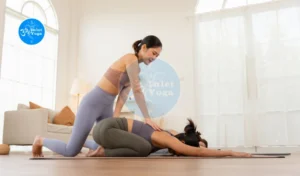
Teachers need to observe as well as instruct. Before class, they can invite students to share relevant concerns privately. During class, they can watch for confusion, signs of strain, or difficulty following the pace and adjust their instructions when appropriate.
A group class cannot always provide the individual attention every student needs. Teachers should recognize when a student may benefit from a different class format or additional guidance from an appropriately qualified professional.
How Inlet’s 200-Hour Training Builds These Skills
Inlet’s 200-hour yoga teacher training meets on Sundays across three modules: Foundations, Voice & Depth, and Integration. The modules guide trainees through the foundations of teaching, developing their teaching voice, and bringing their learning together.
A program spread over several months can give trainees time to reflect on what they learn between sessions. They can practise explaining concepts, notice which instructions are clear, and bring questions back to the group.
Inlet’s training also brings together people with different professional and personal backgrounds. Learning alongside classmates with varied experiences can create opportunities to consider how differently people approach movement and instruction.
If you are comparing programs, review the curriculum, schedule, teaching practice, and overall investment before deciding whether a training fits your goals. Inlet provides details about the cost of its 200-hour yoga teacher training.
Learning From Teachers Who Specialize
For anyone comparing yoga certification in New Jersey programs, the faculty’s experience is another important consideration. Inlet’s teachers bring different perspectives to movement, alignment, and supported practice.
Jennifer Vafakos, E-RYT 500 and YACEP, owns Inlet and has led its 200-hour program since 2016. Her areas of experience include chair yoga, restorative yoga, and yoga for women with breast cancer, alongside lymphatics training. This background is relevant to understanding how yoga practice may need to be adapted for different students.
Allison Kane, E-RYT 500 and YACEP, focuses on embodied movement, Yoga Tune Up, and myofascial release. Her approach explores how people experience and move their bodies, not only how a pose looks from the outside.
Ellen Mosko, E-RYT 500 and YACEP, brings an alignment-focused perspective informed by Iyengar and other yoga traditions.
You can review the teachers’ backgrounds on the Inlet Yoga instructors page. Their different areas of experience give trainees more than one perspective on how to approach instruction.
Practice Teaching: Where Ability Levels Become Real
Reading about modifications is one thing. Giving instructions to a group and seeing how students respond is another. Practice teaching gives trainees an opportunity to work on their cueing, pacing, and communication while receiving feedback.
Students may respond differently to the same instruction. One person may understand a verbal cue immediately, while another may need a demonstration or a simpler explanation. Learning to notice these differences is an important part of developing as a teacher.
Yoga Alliance includes teaching methodology and practicum among the educational areas in its 200-hour standards. You can review the organization’s information and standards on the Yoga Alliance website.
When evaluating a program, ask how practice teaching is incorporated and what feedback trainees receive. Confirm the specific format and requirements directly with the school rather than assuming that every program offers the same amount or type of practice.
Common Mistakes New Teachers Make With Mixed-Level Classes
New teachers can find mixed-level classes challenging for several reasons:
- Teaching only to their own experience. Choosing poses that suit the teacher does not guarantee that they suit everyone in the room.
- Making modifications sound lesser. Students may avoid helpful options if those choices are presented as inferior.
- Demonstrating without describing. Verbal cues help students who cannot see the demonstration clearly.
- Giving too many instructions at once. Constant cueing can leave students with little time to notice their own movement and breathing.
- Missing signs of discomfort. A change in expression, a pause, or a student’s comment may be a reason to check in rather than push ahead.
These situations are reminders that teaching involves more than remembering a sequence. It requires observation, clear communication, and the judgment to adapt when appropriate.
Is This Kind of Yoga Certification in New Jersey Right for You?
Learning to teach different ability levels may appeal to people who enjoy helping others learn. If you can picture yourself leading a community class or guiding students with different levels of experience, these skills are worth developing.
You do not need to master advanced poses before beginning teacher training. A steady personal practice, curiosity, and a willingness to learn how to communicate can provide a useful starting point.
Before enrolling, consider the program’s schedule, curriculum, faculty, and opportunities to practise teaching. Make sure its approach fits your goals and the kind of classes you hope to teach.
Conclusion
Teaching students with different ability levels is an important part of preparing to lead a yoga class. A strong yoga certification in New Jersey should help you develop clear cueing, thoughtful use of props, appropriate modifications, and the ability to respond to students without exceeding your training.
If you are considering Inlet Yoga’s program, start by reviewing the curriculum and speaking with the team about your goals and questions. When you are ready to explore the next step, you can visit the 200-hour yoga teacher training application page.
Frequently Asked Questions
1. What does yoga certification in New Jersey involve?
A 200-hour yoga teacher-training program commonly covers yoga techniques, teaching methods, anatomy, philosophy, and practice teaching. Graduates of a Yoga Alliance Registered Yoga School may apply to register as an RYT 200, subject to the organization’s requirements.
2. Do I need advanced poses to start yoga teacher training?
No. Advanced poses are not the only measure of readiness. A consistent personal practice, curiosity, and a willingness to learn are useful starting points.
3. Should yoga certification in New Jersey teach modifications for beginners and seniors?
A program should help trainees understand variations, props, and supported options. Ask how the curriculum covers different student needs and the limits of a general yoga teacher’s role.
4. How do teachers handle a mixed-level yoga class?
They can offer clear variations, use concise cues, observe how students respond, and adjust the pace when appropriate. Students should be encouraged to choose options that suit their current abilities.
5. Can I take yoga certification in New Jersey while working full time?
It depends on the program’s schedule and your availability. Inlet’s 200-hour training meets on Sundays, which may suit some people who work Monday through Friday. Confirm the current schedule with Inlet before enrolling.
6. Are yoga props only for beginners?
No. Props can help students at different experience levels explore alignment, balance, and comfort. Their usefulness depends on the pose and the student’s needs.
7. What makes Inlet’s yoga certification in New Jersey worth considering?
Inlet’s faculty brings experience across areas such as chair yoga, restorative yoga, embodied movement, Yoga Tune Up, and alignment-focused practice. Review the curriculum and speak with the team to decide whether the program suits your goals.
8. Is Yoga Alliance registration required to teach yoga?
Yoga Alliance registration is voluntary, but some studios may prefer or require particular credentials. Check the requirements of the places where you hope to teach.
9. Can I teach seniors or students with injuries after completing 200 hours?
A 200-hour qualification does not automatically provide specialist training for medical conditions or therapeutic yoga. Teach within your competence, seek additional education where needed, and encourage students to consult appropriate healthcare professionals about medical concerns.
10. How do I start yoga certification in New Jersey at Inlet?
Review the 200-hour training information, consider whether the schedule and curriculum fit your goals, and contact Inlet with any questions. You can then complete the application process if you decide to proceed.