
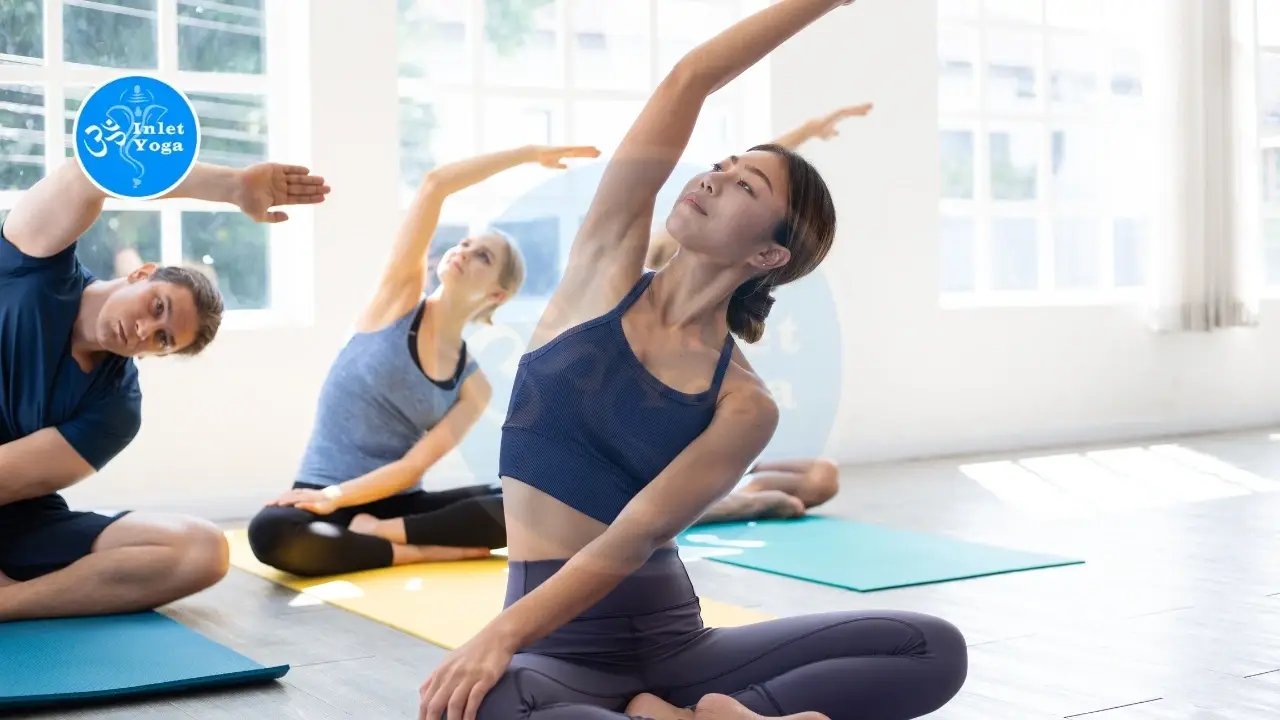
Yoga at home and yoga at a studio both build strength, flexibility, and calm, but they get you there in very different ways. Practicing at home offers flexibility, privacy, and a lower cost, making it a good fit for busy schedules and self-paced learners. Studio yoga offers real-time instructor feedback, structured accountability, and access to props and community, which tends to matter more for beginners and anyone working on injury concerns, movement limitations, or safe alignment support.
When it comes to yoga at home vs studio, neither option is universally “better.” The right choice depends on your experience level, your goals, and how much guidance you need to practice safely. Someone working with back discomfort or movement limitations needs different support than someone who just wants ten quiet minutes of stretching before bed.
At Inlet Yoga in Manasquan, NJ, we hear this question from new students almost every week, usually from people who have been doing YouTube yoga at home and are wondering if it is “enough,” or from studio regulars debating whether they still need to come in every week. Here is how we walk them through it.
Yoga at Home vs Studio: A Quick Comparison
| Factor | Yoga at Home | Studio Yoga |
| Cost | Free to low-cost (app or video subscriptions) | Per-class or membership pricing |
| Instructor Feedback | Minimal to none | Real-time instructor guidance and alignment cues |
| Schedule | Fully flexible | Fixed class times |
| Accountability | Self-directed | Built in through class structure |
| Props & Equipment | Whatever you own | Provided by the studio |
| Community | Limited | Built into every class |
| Best For | Convenience, privacy, self-paced practice | Alignment, structure, motivation |
| Risk of Incorrect Form | Higher | Lower |
What Are the Benefits of Practicing Yoga at Home?
Home practice has grown for a reason. In the debate over yoga at home vs studio, home wins on convenience almost every time. It removes almost every barrier that keeps people from rolling out a mat in the first place: no commute, no class times to work around, no one watching. For a lot of people, that alone is the difference between practicing consistently and not practicing at all.
Flexible Schedule and Convenience
Scheduling is where home yoga vs studio yoga gets decided for a lot of people. You can practice at 6 AM before the house wakes up or at 11 PM after a long shift, no class schedule required. There is no drive time, no parking, and no waiting for a class to start. If your work hours change week to week, home practice bends around your life instead of the other way around.
Greater Privacy and Personal Comfort
Some people simply feel more at ease moving through poses without anyone else in the room. If you are self-conscious about your flexibility, your body, or just being new to yoga, practicing at home removes that pressure entirely. You can fall out of a pose, laugh, or take a break without feeling like anyone noticed.
Lower Cost and Easy Accessibility
Cost is one of the clearest gaps in the yoga at home vs studio comparison. A yoga app subscription or a free video series costs a fraction of studio pricing, and you already own most of what you need: a mat, a quiet corner, and a device. For students who are testing whether yoga is even for them, this low barrier to entry makes home practice an easy starting point.
Freedom to Choose Your Own Pace
At home, you set the tempo. You can hold a pose for ten extra breaths, skip something that does not feel right that day, or repeat a sequence three times. There is no group pace to keep up with, which can feel like a relief if you have ever felt rushed through a pose in a class setting.
What Are the Limitations of Yoga at Home?
Home yoga is flexible and convenient, but practicing alone also has limits. Without instructor feedback, small issues with form, motivation, class choice, and consistency can go unnoticed.
Limited Instructor Feedback
A video can show you a pose, but it cannot see how your body is actually moving. For example, your knee position in Warrior II or your spine in a forward fold may look fine to you, but still need adjustment. This is one of the biggest differences in the yoga at home vs studio comparison.
Easy Distractions and Less Accountability
At home, it is easier to pause, skip, or get distracted by notifications, family, or daily tasks. A studio class creates built-in accountability because you commit to a set time and show up in a focused space.
Difficulty Choosing the Right Class Level
Online classes often use labels like “beginner,” “gentle,” or “all levels,” but those labels do not always match your body or experience. Without guidance, it is easy to choose a class that is too advanced, too easy, or not right for your goals.
Greater Risk of Incorrect Form
Some poses, such as Chaturanga, deep backbends, and inversions, can create strain when alignment is off. Repeating a pose incorrectly at home may build habits that are harder to fix later, which is why many beginners benefit from at least some in-person guidance.
What Are the Benefits of Joining a Yoga Studio?
A studio adds back everything home practice tends to miss: a trained set of eyes, a physical space designed for movement, and other people working alongside you. This is usually where studio yoga pulls ahead in the yoga at home vs studio decision, especially for beginners still building a learning curve.
Real-Time Guidance and Alignment Support
This is where the comparison clearly tips in the studio’s favor. An instructor in the room can see how your body is actually moving, not just how a pose is supposed to look. They can adjust your alignment, offer a modification on the spot, or simply tell you to soften your shoulders before tension builds into something worse. That kind of feedback loop is nearly impossible to replicate through a screen.
Better Structure and Accountability
Structure is one more area where the studio-based yoga wins. Booking into a class and showing up at a set time creates a natural rhythm that home practice often lacks. Many students tell us that simply having a class on the calendar is what gets them to practice consistently, even on days they were not particularly motivated.
Access to Props and Modifications
Equipment is another practical difference in the studio-based yoga. Bolsters, blocks, straps, and blankets are all available in a studio without you needing to buy or store them. Instructors also know how to use these tools to modify a pose for injuries, tight hips, or limited mobility, something that is hard to figure out on your own from a video.
Community, Motivation, and Shared Energy
There is a different kind of energy in a room full of people breathing and moving together. Many students say the community around a studio- familiar faces, encouraging instructors, a shared sense of effort- is what keeps them coming back long after the “New Year’s resolution” motivation fades. You can get a sense of that experience from our instructors, many of whom have been guiding students in Manasquan for years.
What Are the Limitations of Studio Yoga?
Studio practice solves many problems that come with practicing alone, but it also has a few trade-offs. The main limitations are usually cost, fixed timing, travel, and first-class nervousness for newer students.
Higher Class or Membership Costs
Studio classes usually cost more than home yoga, even with class packs or memberships. For students on a tight budget, this can be a deciding factor, although entry-level pricing and new-student offers can make the first step more affordable.
Fixed Schedules and Travel Time
Studio classes happen at set times, and travel adds extra time before and after class. For students with changing work hours, family responsibilities, or limited availability, this can make regular attendance harder.
Group Classes May Feel Intimidating
Some beginners feel nervous walking into a group class, especially when others seem more experienced. This is a common concern, but in a supportive studio environment, most new students find it easier once they are actually in the room.
Is Home Yoga or Studio Yoga Better for Beginners?
When beginners ask us about yoga at home vs studio, we recommend starting in a studio, at least for the first several weeks. Foundational habits like breath timing, basic alignment, and knowing how to modify a pose when something does not feel right are much easier to build with an instructor correcting you in real time. Once those basics are in place, home practice becomes a lot safer and more effective, because you are reinforcing good habits instead of guessing at them.
Our team is a Yoga Alliance Registered School of Yoga, which means instructors are trained specifically in how to guide new students through foundational alignment safely, not just lead a class. That training is part of why we lean toward recommending a studio first for anyone brand new to the practice.
What Inlet Yoga Instructors Commonly Notice
Many beginners who start with online yoga are not doing anything “wrong,” but they often miss small alignment details they cannot see on a screen. In class, instructors commonly notice rounded shoulders in standing poses, locked knees in balance work, or students holding their breath during effort. These small habits are easier to adjust early, before they become part of the student’s normal practice.
Which Option Is Better for Your Yoga Goals?
Rather than asking which side of the home practice vs in-person classes question wins in general, it helps to ask which one supports what you are actually trying to get out of your practice.
For Learning Proper Form and Alignment
In the yoga at home vs studio comparison, a studio wins here, clearly. Alignment is difficult to self-correct, and small errors in poses like Chaturanga or deep twists can lead to injury over time. If your goal is to build a strong technical foundation, in-person guidance, including private yoga sessions for more personalized attention, will get you there faster and more safely than a screen.
For Flexibility and a Busy Schedule
Home practice usually wins if your calendar changes constantly or you are juggling work and family commitments. Even fifteen minutes squeezed in between obligations is more sustainable than trying to make a fixed class time every week.
For Strength, Fitness, and Progress
For pure fitness progress, the comparison between two tends to favor the studio too. Studios generally offer more structured progression, since instructors can push you appropriately, introduce new poses at the right pace, and track how your practice is developing over time. Our class types page shows how classes are organized by intensity, which makes it easier to progress deliberately rather than by guesswork.
For Relaxation and Stress Relief
Both formats can work here, but many people find that a guided, in-person restorative or gentle class helps them switch off more completely than a home video, mainly because there is less temptation to check a phone or cut the session short. If relaxation is your main goal, yoga for stress relief and anxiety covers which styles tend to work best.
For Community and Accountability
This one almost always favors the studio. Showing up somewhere, seeing familiar faces, and being part of a class schedule creates a level of consistency that is difficult to replicate alone in a living room.
Can You Combine Home Yoga With Studio Classes?
Yes, and rather than picking a side in the yoga at home vs studio debate, this combined approach ends up being the most realistic long-term choice for a lot of our students. A common pattern looks like one or two studio classes a week for structure, feedback, and community, paired with short home sessions on the other days to keep the body moving without adding travel time or cost. This combination lets you get the alignment correction and accountability that studio classes provide while still enjoying the flexibility of practicing on your own terms most days of the week.
How to Choose Between Yoga at Home and a Studio
Deciding between yoga at home vs studio starts with being honest about two things: how much guidance you actually need right now, and how much structure you need to stay consistent. If you are new to yoga, recovering from an injury, or working on a specific physical goal, lean toward a studio, at least at first. If you already have a solid foundation and mainly need convenience and flexibility, home practice can carry you a long way. Many students find that trying a studio first, even briefly, makes home practice safer and more effective afterward, because it gives you a baseline to check your form against.
How to Start Yoga Safely
Whichever side of practicing yoga at home or in a studio you land on, safety comes down to the same basics: listening to your body, avoiding pain (as opposed to normal effort), and not rushing into advanced poses before your body is ready.
Safety Tips for Practicing at Home
Keep a clear, uncluttered space, use a non-slip mat, and stick to beginner-labeled sequences from reputable instructors until you have some experience under you. Avoid deep backbends, inversions, or anything that causes sharp pain, and stop immediately if a pose feels wrong rather than pushing through it. As with any physical practice, if you have an existing injury or medical condition, it’s worth checking with a doctor or physical therapist before starting either home or studio yoga.
What to Expect From Your First Studio Class
Arrive a few minutes early, introduce yourself to the instructor, and mention any injuries or limitations before class starts. Expect to be offered modifications throughout, and know that placing your mat toward the back or middle of the room is completely normal for a first class, not a requirement.
The Bottom Line: Yoga at Home or Studio?
There is no universal winner in the practicing yoga at home or in a studio question, only the option that matches where you are right now. Home practice offers convenience, privacy, and flexibility, while studio classes offer feedback, structure, and community that are hard to replace. For most beginners, starting with some studio guidance builds the safest foundation, and from there, many students settle into a mix of both that fits their life and their goals.
If you want to experience the studio side of that equation firsthand, our New Student Special gives you five classes for fifty dollars, enough time to see how in-person guidance changes your practice. Check our class schedule and find a time that works for you.
Frequently Asked Questions
Is yoga at home as effective as studio yoga?
In the yoga at home vs studio comparison, home practice can be just as effective for maintaining flexibility, relaxation, and general movement, especially once you already know proper form. For building strength, learning new poses safely, or correcting alignment, studio classes tend to be more effective because of the real-time feedback an instructor provides.
Is it safe for beginners to learn yoga at home?
It can be, as long as beginners stick to slow, well-explained sequences and pay close attention to how their body responds. However, learning foundational alignment with an instructor first generally reduces the risk of developing bad habits or getting injured in more advanced poses.
Is online yoga better than in-person yoga?
Neither is universally better, and the answer usually comes down to the same yoga at home vs studio factors covered above. Online yoga offers more flexibility and lower cost, while in-person yoga offers real-time correction, structure, and community. The better option depends on your experience level, goals, and how much guidance you need.
Do you need to be flexible before joining a studio?
No. Studios welcome all levels, and instructors regularly offer modifications for students with limited flexibility. Flexibility is something you build through consistent practice, not a requirement to walk in the door.
Is home yoga cheaper than studio yoga?
Yes, in most cases. Cost is usually the clearest gap in the yoga at home vs studio comparison. Home practice generally costs little to nothing beyond a mat, while studio classes involve per-class or membership pricing. Studios do offer entry-level packages that make trying it out more affordable than a full membership commitment.
Can you combine home and studio yoga?
Yes. Many students attend one or two studio classes a week for structure and feedback, then practice at home on other days for convenience. This combination often provides the best balance of guidance, accountability, and flexibility.






