Twenty years ago, yoga looked, and felt, very different.
Studios often followed defined systems led by male teachers who carried the authority of lineage. We were told exactly how to move, how to cue, even how to assist and speak. Systems like Bikram, Ashtanga, and Iyengar provided structure and discipline. They offered a map, a clear path where the teacher’s word was final, and the role of the student was to follow with devotion.
That time had its beauty. It gave us form, rigor, and the roots of discipline. But it also reflected the world as it was, hierarchical, linear, and shaped by voices that were, by and large, male.
Today, the yoga landscape is unrecognizable from that world. It’s a melting pot of ideas, science, trauma awareness, and creativity. Teachers no longer strive to emulate a single system; instead, they draw from a living tapestry of experience, movement science, psychology, mindfulness, and compassion. We’ve moved away from systems and closer to human beings.
And perhaps that evolution is no accident.
The last two decades have changed us all. We’ve lived through political polarization, acts of violence, and wars that have kept the nervous system of the collective on high alert. We’ve faced a global pandemic that reshaped the way we connect, gather, and breathe together. We’ve witnessed movements that have changed culture at its core: #MeToo and cancel culture awakening accountability; Black Lives Matter and social equity movements redefining inclusion; body positivity and mental health advocacy transforming how we speak about the body and mind; and LGBTQ+ visibility broadening our language of identity and belonging.
We cue differently because we speak to a more tender world.
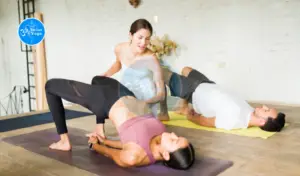
We assist differently because we understand the importance of consent and agency.
We hold space differently because we know what collective trauma feels like.
Even how we reference philosophy has shifted, from doctrine to dialogue, from rigid interpretation to lived reflection.
Yoga today mirrors not only our bodies, but our culture, one that’s been stretched, challenged, and reborn.
Yet, amid all this change, I believe we are being called not to abandon what came before, but to integrate it. The discipline of the past and the awareness of the present can coexist beautifully. We can take the best of what we’ve learned from every era to create a new culture of shared learning, one where students and teachers grow together, informed by compassion, curiosity, and the wisdom of lived experience.
While parts of society may turn away from God, faith, or religion, yoga still offers something sacred: a space for community, for seeing the good in one another, and for remembering our shared humanity.
In this way, the yoga room becomes more than a practice space, it becomes a sanctuary for our times. A place where the evolution of teaching reflects the evolution of being human.
About the Author
Jennifer Vafakos is the owner of Inlet Yoga in Manasquan, New Jersey, and the lead instructor of the studio’s 200-hour and 300-hour Yoga Teacher Training programs. Her teaching blends modern understanding with traditional wisdom, offering a heart-centered approach to practice and pedagogy. Jennifer’s passion lies in helping teachers and students alike connect deeply, to their bodies, communities, and sense of purpose, through yoga as both discipline and devotion.