
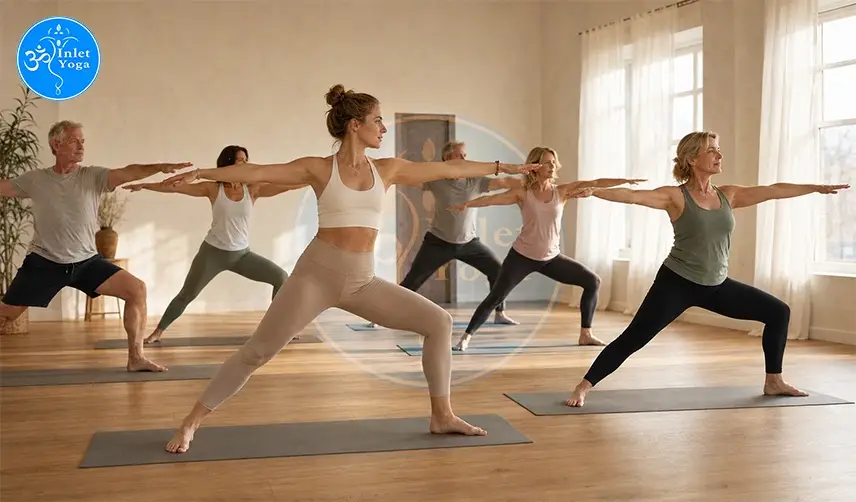
Yoga for better sleep works best when the practice helps your body shift out of “go mode.” Slow movement, comfortable poses, steady breathing, and a quiet final rest can create a calmer transition into bedtime.
The best evening yoga classes are usually restorative, gentle, Yin, or breath-focused. At home, a short sequence of supported nighttime yoga poses can help release physical tension without overstimulating your body.
A Better Night Often Starts Before You Get Into Bed
Ever feel tired all day, then suddenly wide awake when your head hits the pillow?
For many people, the problem is not a lack of tiredness. It is that the body is still carrying the speed of the day: work stress, screen time, sitting tension, unfinished tasks, and a mind that keeps replaying everything.
That is where yoga for better sleep can become useful. The goal is not to force yourself to sleep. It is to create a slower, quieter transition between your busy day and your bedtime routine.
A calming yoga practice can help you notice where you are holding tension, soften your breathing, and give your nervous system a clearer signal that the day is winding down. For a broader guide to choosing the right yoga style and building a sleep-friendly routine, see our full guide to the best yoga for better sleep.
Why So Many People Feel Tired but Still Can’t Sleep
Many people assume they have a sleep problem because they are not tired enough. In reality, they are often mentally exhausted while their nervous system is still running at full speed. At Inlet Yoga, we regularly meet students who say they feel drained all day but struggle to switch off at night. A gentle evening yoga practice helps create a clearer separation between a busy day and a restful night, making it easier for both the body and mind to settle.
The Best Evening Yoga Classes for Better Sleep
Not every yoga class is designed to make you feel sleepy. A fast, heated, or high-intensity class may feel great earlier in the day, but it can leave some people feeling energized close to bedtime.
For an evening practice, look for classes that emphasize slower movement, longer holds, breath awareness, and rest.
Restorative Yoga: Best for Deep Relaxation
Restorative Yoga is often one of the best choices for people who feel mentally busy, physically tense, or overwhelmed at the end of the day.
The practice uses supportive props, such as bolsters, blankets, and blocks, to help you stay comfortably in gentle poses for longer periods. Instead of pushing your flexibility, you are encouraged to soften and settle.
A restorative class can be especially helpful when you want to feel supported rather than challenged. It is less about performance and more about allowing the body to rest.
Yin Yoga: Best for Slowing Down and Releasing Tension
Many of our evening students are surprised by how much tension they notice once they slow down. During Yin Yoga, we often see people relax more deeply simply by holding supported poses and breathing without rushing. It targets deeper connective tissues around areas such as the hips, pelvis, and lower back.
For people who spend long hours sitting, driving, standing, or carrying stress in their bodies, this slower style can feel deeply grounding. It also encourages stillness, patience, and steady breathing.
However, Yin Yoga should never feel sharp or painful. The purpose is gentle sensation and mindful release, not forcing your body deeper into a pose.
Gentle Yoga: Best for Beginners and Busy Minds
At Inlet Yoga, we often recommend Gentle Yoga to students who feel mentally tired but physically restless in the evening. Many tell us they leave class feeling calmer without feeling overstimulated before bed.
This style can be a good fit for students exploring yoga for better sleep for the first time. You still receive the benefits of movement, but at a pace that feels more manageable before bed.
For beginners, choose a class described as gentle, low-intensity, beginner-friendly, restorative, or slow flow.
Breath-Focused Yoga: Best When Your Mind Will Not Switch Off
Sometimes the body feels tired, but the mind is still racing. In that moment, breath-focused yoga can be more useful than doing many physical poses.
A class that includes slow breathing, guided relaxation, meditation, or a longer Savasana may help you shift your attention away from tomorrow’s worries and back into the present moment.
At Inlet Yoga, low-intensity yoga classes such as Yin and restorative-focused practices can be a useful place to start when your goal is to unwind rather than train intensely. Ready to try one? Find an evening class on our schedule.
How to Choose the Right Evening Yoga Class
The right class should leave you feeling calmer, not more wired.
| Your Evening Need | Yoga Class to Consider | What to Look For |
| You feel tense or overstimulated | Restorative Yoga | Props, supported poses, slow pace |
| Your hips, back, or shoulders feel tight | Yin Yoga | Longer floor-based holds and quiet breathing |
| You are new to yoga | Gentle Yoga | Clear instructions, modifications, and low intensity |
| Your mind is racing | Breathwork or guided relaxation | Pranayama, meditation, and longer Savasana |
| You still want mild movement | Slow Flow or gentle Vinyasa | Easy transitions and no pressure to perform |
Timing Matters More Than Perfection
You do not need to attend a class at the same time every night. What matters most is choosing a practice that suits your energy level and leaves enough space before bed.
At Inlet Yoga, we’ve noticed that students respond differently to evening practice. Some feel most relaxed after a class one to three hours before bed, while others prefer a short routine at home just before sleeping. Paying attention to how your own body responds is often more helpful than following a fixed schedule. If an intense class leaves you feeling energized, save it for earlier in the day and choose slower practices in the evening.
6 Nighttime Yoga Poses to Try Before Bed
You do not need a 60-minute class to create a calmer night. A short practice of 10 to 15 minutes can be enough to help you release the day.
Move slowly, breathe naturally, and use pillows or blankets whenever they help you feel more comfortable.
1. Supported Child’s Pose:
Kneel on the floor with your knees comfortably apart. Place a pillow or bolster under your chest, then fold forward and rest your head gently. This pose can ease tension in the back, shoulders, and hips while creating a sense of safety and rest. Stay here for one to three minutes.
2. Cat-Cow With Slow Breathing
Come onto your hands and knees. On an inhale, gently lift your chest and tailbone. On an exhale, round your back and draw your belly inward. Keep the movement small and unhurried. This is not about stretching as far as possible; it is about reconnecting movement with breath. Continue for five to eight slow rounds.
3. Reclined Bound Angle Pose
Lie on your back, bring the soles of your feet together, and allow your knees to open out to the sides. Place pillows under your knees if your hips feel tight. Rest one hand on your chest and one hand on your belly. Let your breath become slower without trying to control it too much. Stay for two to five minutes.
4. Supine Twist
Lie on your back and draw both knees toward your chest. Let your knees fall gently to one side while keeping your shoulders relaxed. You can place a pillow between or beneath your knees for support. Repeat on the other side, moving slowly and comfortably. Stay for one to two minutes per side.
5. Legs Up the Wall
Sit beside a wall, then gently swing your legs upward as you lie back. Your hips can be close to the wall or slightly farther away, depending on what feels comfortable. This pose is simple, quiet, and easy to adapt. It can be a good choice after a long day spent sitting, standing, or moving around. Stay for three to five minutes, then bend your knees before rolling onto your side.
6. Savasana With a Pillow Under Your Knees
Lie flat on your back with your arms resting comfortably by your sides. Place a pillow or rolled blanket under your knees to reduce pressure on your lower back. Close your eyes and notice the support beneath you. Instead of trying to “clear” your mind, simply return to the feeling of your breath whenever thoughts appear. Stay for three to 10 minutes.
A Simple 10-Minute Yoga Routine for Better Sleep
When you do not know where to begin, use this simple sequence:
- Supported Child’s Pose: two minutes
- Cat-Cow: one minute
- Reclined Bound Angle Pose: two minutes
- Supine Twist: one minute each side
- Legs Up the Wall or Savasana: three minutes
This routine is intentionally gentle. You should feel quieter than when you started. Even a short evening routine practiced consistently can be more beneficial than doing a longer session only once in a while.
What to Avoid Right Before Bed
Yoga should not feel like another task to complete perfectly. Keep your nighttime practice simple and avoid anything that leaves you feeling strained, overheated, or overly alert.
You may want to move intense flows, strong backbends, difficult balances, and high-energy classes to earlier in the day. For better sleep, choose slower movement and leave space for rest.
Avoid forcing deep stretches. A pose that feels uncomfortable can make your body guard against the stretch instead of relaxing into it.
When Yoga May Not Be Enough
Yoga can support relaxation and sleep habits, but it is not a replacement for medical care.
Speak with a qualified healthcare professional if sleep problems are persistent, affect your daytime functioning, involve loud snoring or breathing pauses, or cause ongoing anxiety about sleep. The Sleep Foundation offers further guidance on healthy sleep habits and when to seek professional support.
Find an Evening Yoga Practice That Helps You Unwind
The best yoga for sleep is not the most advanced class or the deepest stretch. It is the practice that helps you slow down, release daily tension, and feel calm enough to rest.
Whether you are drawn to Gentle Yoga, Yin Yoga, or Restorative Yoga, a low-intensity evening class can help create a more peaceful transition from a busy day to bedtime. The key is choosing a practice that feels supportive, comfortable, and easy to maintain.
For students in Manasquan and the Jersey Shore, Inlet Yoga offers welcoming class options for different energy levels, experience levels, and wellness goals. Give yourself time to move slowly, breathe deeply, and notice what helps your body feel more settled.
Ready to Sleep Better?
Explore Inlet Yoga’s current class schedule and find an evening practice that fits your routine. Create a dedicated moment to step away from daily stress, reconnect with your body, and wind down with intention.
View Our Evening Yoga Class Schedule
Frequently Asked Questions
Which type of yoga is best before bed?
Restorative Yoga, Yin Yoga, Gentle Yoga, and breath-focused classes are usually the best options before bed. These styles prioritize slower movement, longer holds, and relaxation rather than high-intensity exercise.
Can yoga really help you sleep better?
Yoga may support better sleep by helping you unwind, release physical tension, and manage stress. It works best as part of a consistent bedtime routine rather than as a one-time solution.
How long should I do yoga before bed?
A 10- to 20-minute gentle practice is enough for many people. Choose a duration that feels calming and realistic for your schedule.
Should beginners do nighttime yoga?
Yes, beginners can benefit from nighttime yoga when they choose gentle, beginner-friendly poses and avoid forcing deep stretches. A supportive class can also help you learn safe alignment and modifications.
Is it better to do yoga right before bed or earlier in the evening?
Gentle yoga can be done shortly before bed, while a longer class may work better one to three hours earlier. Notice whether your practice leaves you relaxed or energized.
What should I do if a nighttime yoga pose feels uncomfortable?
Never force a stretch or stay in a pose that causes pain. Use pillows, blankets, or blocks for support, and choose a simpler variation that helps your body relax.






