
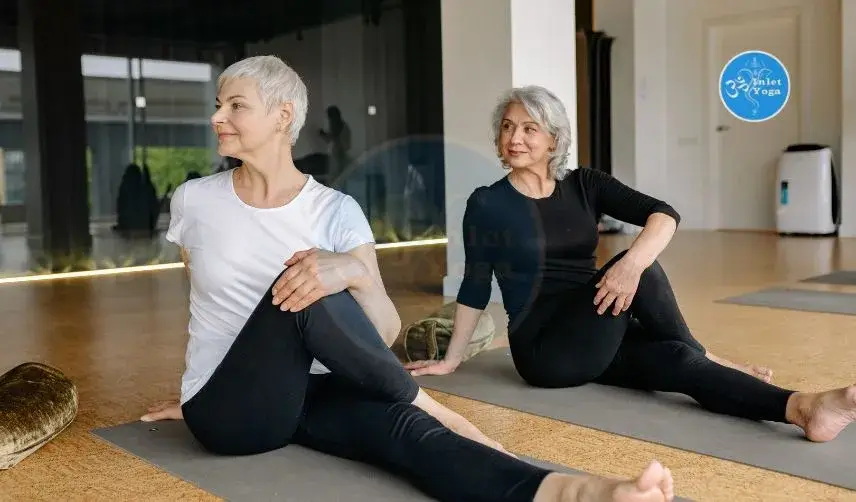
If your lower back is constantly tight or achy, there’s a good chance your hips are part of the problem. The two are connected in ways most people don’t realize until they start addressing both together. Yoga for back pain and tight hips is one of the most effective ways to do that, but only certain styles and poses actually get to the root of it.
At Inlet Yoga, a studio based in Manasquan, NJ, and serving the Jersey Shore community, this is one of the most common concerns we help students work through. Here’s what causes this kind of pain in the first place, why a slower style like Yin Yoga can help more than a fast-paced flow, and which poses are worth your time.
What Causes Back Pain That Yoga Can Actually Help
Tight Hip Flexors and Their Link to Low Back Pain
Your hip flexors connect the top of your legs to your hips, and when they’re tight (which happens easily from sitting), they pull on the pelvis and put extra strain on your lower back. This is one of the most common reasons people feel low back pain that seems to come from nowhere. It isn’t really coming from nowhere; it’s coming from hips that haven’t moved through their full range in a while.
At Inlet Yoga, many students are surprised to learn that improving hip mobility often helps reduce the tension they originally assumed was coming only from their lower back. We frequently see this connection become more noticeable as students practice consistently over several weeks.
Poor Posture From Sitting (Desk Work, Driving)
Long hours at a desk or behind the wheel flatten the natural curve of your spine and round your shoulders forward over time. This posture shortens your hip flexors even further and weakens the muscles that are supposed to be holding your spine up, so your lower back ends up compensating for work it wasn’t built to do alone.
We’ve found that students who spend long hours at a desk or driving often notice stiffness in the front of the hips before they realize how much it affects their posture. Addressing both mobility and movement habits usually leads to better long-term comfort.
Weak Core and Glute Muscles
When your core and glutes aren’t doing their share of the work, your lower back picks up the slack. Weak glutes in particular can lead to an anterior pelvic tilt, which deepens the curve in your lower spine and creates chronic strain over time. Strengthening these muscles is just as important as stretching the tight ones.
When Yoga Isn’t Enough: Signs to See a Doctor First
Yoga can help with a lot of everyday tightness and muscular back pain, but it isn’t a substitute for medical care. If you’re dealing with sharp or shooting pain, numbness or tingling down your leg, pain that doesn’t improve with rest, or pain following an injury, talk to a doctor before starting a yoga practice. Once you have the go-ahead, a gentle, guided class is a much safer starting point than pushing through discomfort on your own.
Why Yin Yoga Targets Connective Tissue (Not Just Muscles)
What’s the Difference between Yin and Yang Yoga
Most yoga classes you’ve probably taken (vinyasa, power, ashtanga) fall into the “yang” category. They’re active, muscle-focused, and move at a pace that builds heat and strength. Yin Yoga is the opposite. Poses are held for several minutes at a time with the muscles relaxed, which shifts the work away from the muscles and into the deeper connective tissue around your joints.
In our Yin classes, it’s common for first-time students to expect a simple stretching session. Many later tell us that holding poses longer helped them notice areas of tension they hadn’t been aware of before.
How Long Holds Affect Fascia, Ligaments, and Joints
When you hold a pose for a few minutes instead of a few breaths, the connective tissue around your hips and spine has time to actually soften and release, not just stretch and snap back. This also allows synovial fluid to move through your joints, which helps with lubrication and mobility over time. It’s a slower process than a quick muscular stretch, but it tends to create more lasting change in areas that feel chronically tight.
Why This Matters More for Tight Hips Than a Fast-Paced Flow
Tight hips are usually a connective tissue problem as much as a muscular one, especially if the tightness has been building for months or years. A fast vinyasa class might make your hips feel looser for an hour, but a slower Yin practice is what actually works on the tissue that’s been holding that tension in the first place. This is exactly why, when it comes to yoga for back pain and tight hips, we usually recommend Yin Yoga first to anyone dealing with both together.
Poses That Help Your Hips and Lower Back and What to Avoid
A few poses consistently show up as the most effective for this combination of tight hips and back pain. Most of these are Yin or gentle poses, meant to be held for one to three minutes rather than a few quick breaths, since that’s what gives the connective tissue time to actually release.
Pigeon Pose
A deep hip opener that stretches the glutes, outer hips, and psoas all at once. Bring your front shin at an angle in front of you and let your back leg extend behind, keeping your hips as square as possible. If your hip doesn’t reach the floor, a blanket or block underneath will let you settle in without forcing it.
Butterfly Pose
It opens the inner hips and groin while gently releasing the lower back. Sit with the soles of your feet together and let your knees drop open, then fold forward slightly from the hips rather than rounding through your spine.
Cat-Cow
A simple, low-impact way to mobilize the entire spine. Moving slowly between an arched and rounded back on all fours warms up the lower back before deeper stretching and is a good way to check in with how your spine is feeling that day.
Child’s Pose
Stretches the hips, thighs, and lower back while calming the nervous system. Widening your knees wider than your hips (rather than keeping them together) takes pressure off the lower back and lets you sink deeper into the stretch.
Sphinx Pose
A gentle backbend that strengthens the lower back without straining it. Propping up on your forearms with your elbows under your shoulders is usually enough; you don’t need to press up higher to feel it working.
Reclined Twist
It releases tension through the spine, hips, and outer glutes. Letting your knees fall to one side while keeping both shoulders grounded gives you a deep stretch without putting weight through the lower back.
Reclined Figure Four
It targets the outer hip and glute directly, which is often where tight-hip pain is actually rooted. Lying on your back and crossing one ankle over the opposite thigh, then gently pulling the uncrossed leg toward your chest, is a safe way to isolate this area without straining your knees.
Supported Bridge Pose
A gentle way to strengthen the lower back and glutes while opening the front of the hips. Placing a block under your sacrum once you lift your hips turns this into a passive, restorative hold instead of an active strengthening pose, which is often more appropriate when back pain is present.
Holding each pose for a minute or two, breathing slowly, and coming out of it gradually tends to work better than moving through these quickly. If you’re new to this kind of practice, our Yin Yoga class is built around exactly this pacing.
Poses to Modify or Skip If You Have Back Pain
Deep, unsupported forward folds and fast-paced backbends can aggravate an already irritated lower back, especially if your hamstrings or hip flexors are very tight. Anything that causes sharp or shooting pain, rather than a normal stretching sensation, is a sign to back off or skip the pose entirely. If a pose asks you to round your lower back under load, that’s usually one to modify.
How to Use Props Safely
Blocks, bolsters, and straps aren’t a sign you’re doing yoga “wrong,” they’re what make poses accessible without straining your back. A block under the knee in a hip opener, a bolster under the hips in a reclined pose, or a strap in a seated fold can take pressure off your lower back while still giving you the stretch you’re after.
How Often Should You Practice for Relief
A short daily routine (10 to 15 minutes of the poses above) can help manage day-to-day tightness, especially if you sit for long stretches. But if your pain is more persistent, a guided class gives you real-time feedback and modifications that are hard to replicate on your own, which matters a lot when back pain is involved. Most people see the best results combining both: a weekly or twice-weekly class alongside a short at-home practice.
Find Relief with Yoga in Manasquan, NJ
If you’re local to the Jersey Shore and want to work through this with actual guidance instead of figuring it out from a screen, Inlet Yoga in Manasquan, NJ, is a good place to start. We put together a full breakdown of which yoga class to take for back pain in Manasquan, NJ, and what to expect at your first class, covering the specific classes we offer, how to talk to your instructor about back pain, and what modifications to ask for.
Many people come to their first class expecting they need to be flexible before they can begin. In reality, we often see the opposite. Students who start with tight hips or limited mobility frequently gain confidence as they learn simple modifications and move at their own pace. Over time, small improvements in comfort and movement can make everyday activities feel easier.
Final Thoughts
Tight hips and back pain almost always show up together, so the most effective yoga for back pain and tight hips addresses both at once rather than treating your lower back in isolation. A slower style like Yin Yoga gets to the connective tissue that’s usually behind chronic tightness, while a bit of core and glute strength work keeps that relief from being temporary.
You don’t need to be flexible or experienced to start. What matters more is choosing a class that matches where your body is right now and being consistent with it. If you’re in the Manasquan, NJ area, Inlet Yoga is here to help you figure out which class fits, offer modifications where you need them, and support you as you build a practice that actually holds up over time.
Inlet Yoga is a yoga studio in Manasquan, NJ, offering Yin, Gentle, Restorative, and Slow Flow classes for students throughout the Jersey Shore area. If you’re ready to try a class, our New Student Offer gives you 5 Classes for $49.
FAQ
Is yoga good for chronic lower back pain?
Yes, for most people. Yoga improves flexibility, strengthens the core and glutes, and can reduce the muscular tension that contributes to chronic back pain. It isn’t a replacement for medical treatment if there’s an underlying injury, so check with a doctor first if your pain is severe or ongoing.
What yoga pose is best for tight hips and lower back?
Pigeon Pose is one of the most effective single poses, since it stretches the hips, glutes, and psoas at the same time. Butterfly Pose and Reclined Twist are close behind for targeting both the hips and lower back together.
Should you do yin or vinyasa yoga for back pain?
Yin Yoga is generally the better starting point, since it targets the connective tissue around the hips and spine that’s often behind chronic tightness. Vinyasa can be added back in once your pain has settled and you’re ready to build strength.
How long does it take for yoga to help with back pain?
Some people feel looser after a single session, but real, lasting relief usually takes 2 to 4 weeks of consistent practice, a couple of times a week. Yin Yoga in particular tends to work gradually since it’s working on connective tissue rather than just muscle.
Can tight hips actually cause lower back pain?
Yes. Tight hip flexors pull on the pelvis and change the angle of your lower spine, which forces your lower back to compensate. This is one of the most common and overlooked causes of chronic low back pain, especially in people who sit for long periods.
Is it better to stretch or strengthen for back pain caused by tight hips?
Both matter, but in a specific order. Stretching tight hip flexors and connective tissue first makes room for movement, and strengthening the core and glutes afterward is what keeps the pain from coming back. Doing only one without the other tends to give short-term relief at best.
Is yoga better than physical therapy for back pain?
They’re not really competing options. Physical therapy is often the right choice for a specific injury or diagnosis, while yoga is better suited to general tightness, poor posture, and prevention. Many people benefit from combining both, especially if a doctor or physical therapist has cleared yoga as safe to add in.
What’s the best time of day to do yoga for back pain?
Morning practice can help work out stiffness that builds up overnight, while evening practice can release tension from a day of sitting or standing. Neither is objectively better; what matters most is picking a time you’ll actually stick with consistently.
Can yoga help with sciatica caused by tight hips?
Gentle hip-opening poses, especially ones like Pigeon Pose and Reclined Figure Four, can relieve pressure on the sciatic nerve when tight hip and glute muscles are contributing to the pain. If sciatica is severe, sudden, or accompanied by numbness, see a doctor before starting a yoga practice.
Do I need to be flexible to start yoga for tight hips and back pain?
No, and in most cases the opposite is true. Tight hips and limited flexibility are usually the exact reason people start this kind of practice in the first place, not a barrier to it. Gentle and Yin classes are built specifically for bodies that aren’t flexible yet.






