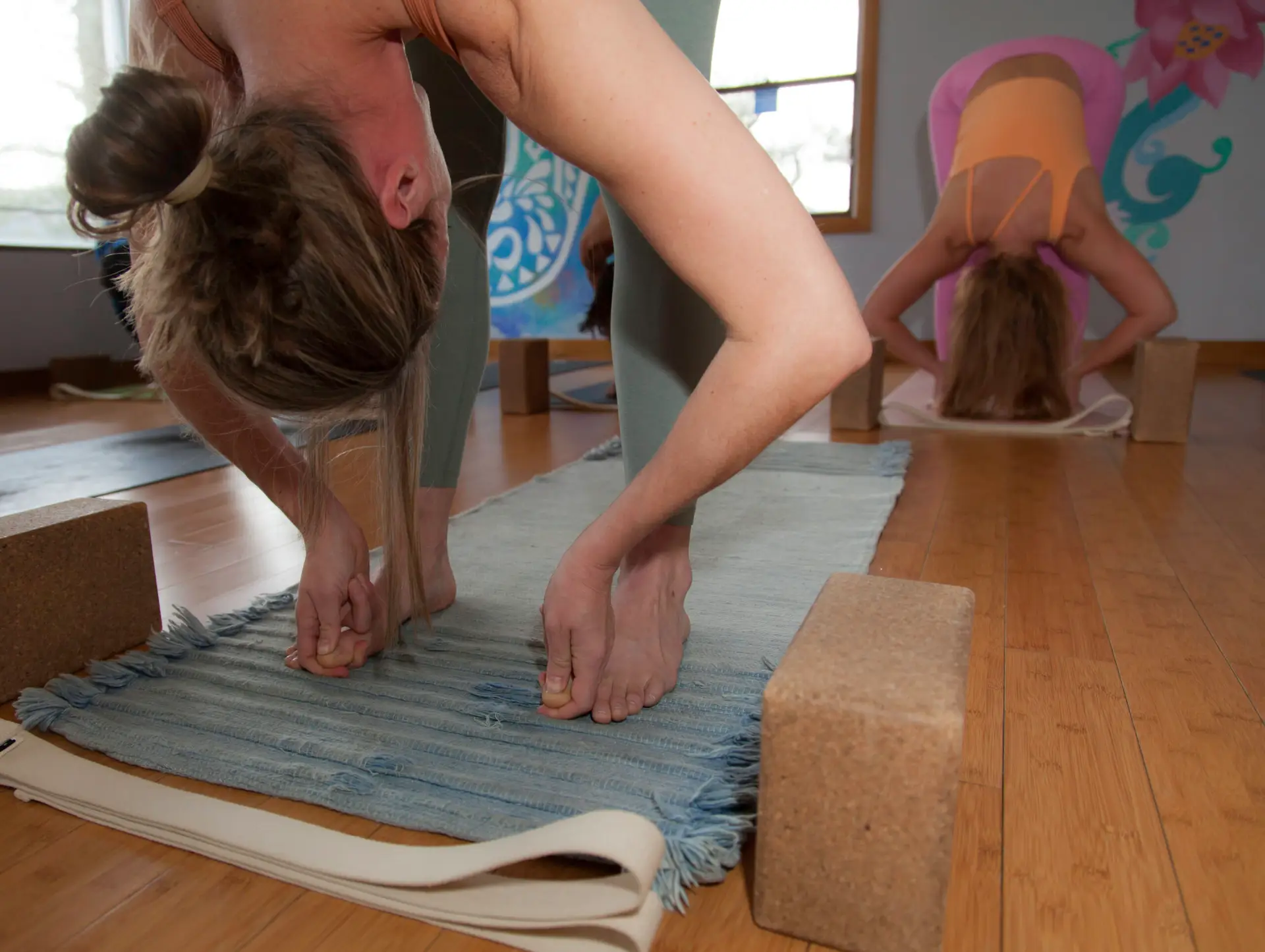
The other day in a yoga workshop, something quietly profound happened.
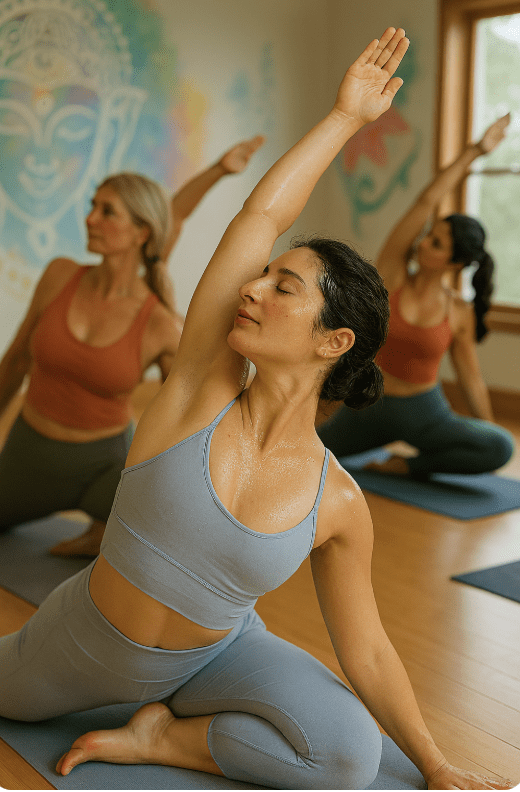
I was practicing alongside a group of thoughtful students and teachers—some of whom I’ve taught over the years, some who have taught me. One of my former teachers was asked to demo a shape. As she moved through it, something subtle but striking shifted in the room. She wasn’t striving or struggling—she was present, moving with calm clarity. And then a student beside me whispered something I haven’t stopped thinking about:
“She only started to sweat when she pulled back on her effort.”
At first, it seemed counterintuitive. Isn’t it when we push to our edge that we build heat? Isn’t that where transformation happens—in the maximum effort?
But the truth is, real transformation often begins when we stop pushing. When we create space for the body to recruit the right muscles, to breathe, to respond—not react. When we release the excess tension we didn’t even know we were carrying.
The Science of the Sweet Yoga Spot
That moment in class perfectly illustrates what neuroscience and somatic research are increasingly pointing to:
When we operate at maximum output, especially over time, our system shifts into overdrive—muscles clench inefficiently, breath becomes shallow, and the nervous system is on high alert. This is often the sympathetic nervous system—our fight-or-flight state—doing what it does best: protect.
But when we back off just slightly, the body accesses what science calls the aerobic threshold or optimal neuromuscular efficiency. Energy isn’t wasted in unnecessary tension. Breath deepens. The parasympathetic nervous system—rest and digest—has a chance to engage.
This is where the default mode network in the brain activates too, the network associated with insight, reflection, and creativity. When we stop trying, the body and mind begin integrating. We absorb. We respond. We sweat—not from panic or strain, but from deep, sustainable engagement.
Why Do We Push So Hard?
I think it’s important to ask why this even feels radical.
Why does a student observing restful power strike us as unusual or insightful?
Because many of us were raised in a culture that whispers (and sometimes shouts) “not enough.”
Not fit enough. Not productive enough. Not spiritual enough. Not successful enough.
We are sold perfection. We are sold improvement. And we are told we must effort our way to worthiness. That more effort = more value.
This creeps into our practice too. The way we grip in a Warrior II. The way we chase a handstand. Even the way we teach. Always reaching for more.
Rest is Not Complacency
During the workshop, the teacher asked, “What is the opposite of perfectionism?”
Someone answered: “Rest.”
I loved that answer. But I’d like to take it a step further.
Rest isn’t checking out. It’s checking in.
What I’m talking about isn’t a sleep-in or collapse. It’s intentional engagement, just below your maximum output. That golden space where you’re awake, attuned, and working with yourself rather than against yourself.
This place allows the right muscles to do the work, the breath to lead the way, and our attention to be present—not performative.
From the Mat Into Life
This concept of pulling back a little has changed how I move in practice—and how I move in life. It’s made me more available to my family, more generous in my teaching, and honestly, more myself.
I’m not trying to earn worthiness anymore. I’m here to participate.
So the next time you’re on your mat, ask yourself: What would it feel like to be just slightly under your edge—not because you’re giving up, but because you’re waking up?
You might find that the real fire starts not in the push, but in the space you make to feel it.