
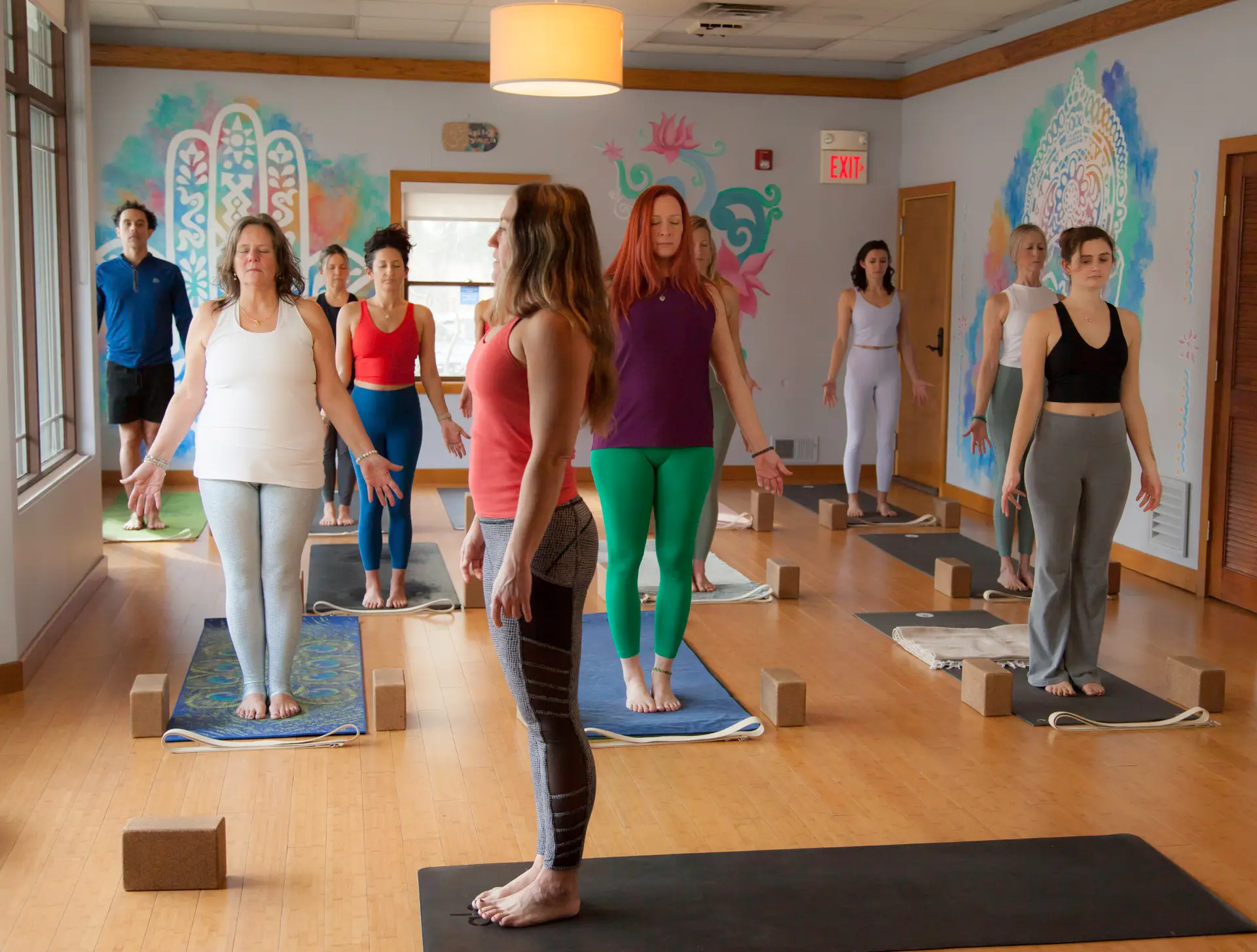
Why Structure Matters: The Energetic Blueprint Behind Our Teacher Training
At Inlet Yoga, we don’t teach in silos. We teach in spirals—layering one weekend upon the next, returning to themes with new depth, and building a container that allows the teachings to land not just in the mind, but in the body, breath, and voice of the student teacher.
Our 200-hour training isn’t just a checklist of modules—it’s a thoughtfully sequenced journey. One that honors the energetics of the body, the science of learning, and the seasonal wisdom of Ayurveda. And it’s designed to help you retain, apply, and teach yoga with clarity and confidence.
A Layered Learning Model That Flows
Each Teacher Training weekend at Inlet follows a consistent, intentional rhythm. We don’t spend the entire day on one subject—instead, we blend practices and discussions in a way that supports integration. By the middle of the training, students have built a strong container for sequencing, language, and understanding the relationship between theory and practice.
Here’s an example of how a typical weekend might be structured:
- Morning Ritual (30 min)
A grounding start with mantras, meditation, pranayama, and check-ins connected to the weekend’s focus—whether it’s seasonal, energetic, or anatomical. - Energetic or Ayurvedic Framework
We explore the subtle body and seasonal doshas in alignment with the time of year, creating a natural rhythm to how content unfolds. - Anatomy Lecture
Interactive and applied, our anatomy teachings are tied to practical movement and sequencing foundations. - Practice Teaching
Students are supported in teaching from day one, with feedback and review built into every weekend. - Practice Class or Community Teaching
A space to apply and embody the teachings, either through guided group practice or open classes.
Each weekend builds on the last—not by starting from scratch, but by returning to what’s been taught and deepening it. This consistent review and layering allows students to truly absorb and integrate the material.
Our Starting Point: Introduction + Orientation
What we refer to as “Weekend 1” is really more than just the first weekend—it’s our foundation. A deep introduction into the structure of the training, how to get the most from your experience, and what kind of support you can expect.
We explore:
- The principles that guide how we teach and how you’ll learn
- How we evaluate and support your progress (without pressure)
- The shared language we’ll use across anatomy, philosophy, and energetic systems
- What to focus on and how to organize your notes and learning
We also begin our journey with the basics—breath, mantra, mudra, the story of the universe, and the five elements—all of which anchor the lens through which we’ll view yoga across the months ahead.
A Flexible Framework, Not a Rigid Schedule
What we’ve shared here is approximate—not a locked-in syllabus. While we do follow a carefully considered arc, we remain open to evolving the content based on the needs of the students in the room. Some weekends may expand on certain ideas, while others shift slightly to meet the moment. This adaptability is part of what makes our program truly student-centered.
Our lead teachers, Allison and Jennifer, intentionally connect each thread—repeating concepts with added nuance, bridging weekends with consistent through-lines, and ensuring that no piece of information is left hanging.
Learning That Lasts
By the midpoint of training, you’ll have not just knowledge, but a working container for sequencing, a vocabulary rooted in both classical and contemporary yoga, and a deeper understanding of your own voice as a teacher. From there, we move forward together—always building, always refining.
If you’re curious about how this approach could support your journey, we invite you to connect. write [email protected]
all photos by Odetta Cole Photography
Conclusion
A thoughtfully structured 200-hour yoga teacher training is more than a series of classes as it is a carefully sequenced journey that supports every aspect of learning. By layering knowledge, integrating practical teaching, and providing consistent opportunities for reflection, students gain clarity, confidence, and a strong foundation for guiding others. Each session builds upon the last, ensuring that concepts are not only understood but embodied, allowing future teachers to navigate their classrooms with presence and skill. This approach bridges theory and practice, helping students retain essential teachings while developing their own voice. With a training designed around structure and intentional learning, graduates emerge prepared, inspired, and capable of sharing yoga with authenticity and clarity, fully experiencing the benefits of an organised, supportive, and immersive learning environment.
Join Inlet Yoga for our 200-hour yoga teacher training. Experience structured, clear, and practical learning. Limited spots, so enroll today!
FAQs
- How long does a 200-hour yoga teacher training usually take?
Most programs run over several months with weekend or weekday sessions, combining theory, practice, and teaching experience to complete 200 hours. - Do I need prior yoga experience to join a 200-hour training?
Yes, basic yoga experience is recommended, but the program is designed to guide students at all levels through structured learning. - What will I learn in a structured yoga teacher training program?
You will gain skills in anatomy, sequencing, teaching methodology, breathwork, meditation, and how to lead classes with confidence. - Can I use this training to teach professionally?
Yes, completing a 200-hour yoga teacher training prepares you to teach yoga safely and effectively anywhere. - How does a structured program differ from a general yoga training?
A structured program sequences learning, revisits key concepts, integrates practice and feedback, and ensures students retain knowledge while building practical teaching skills.