
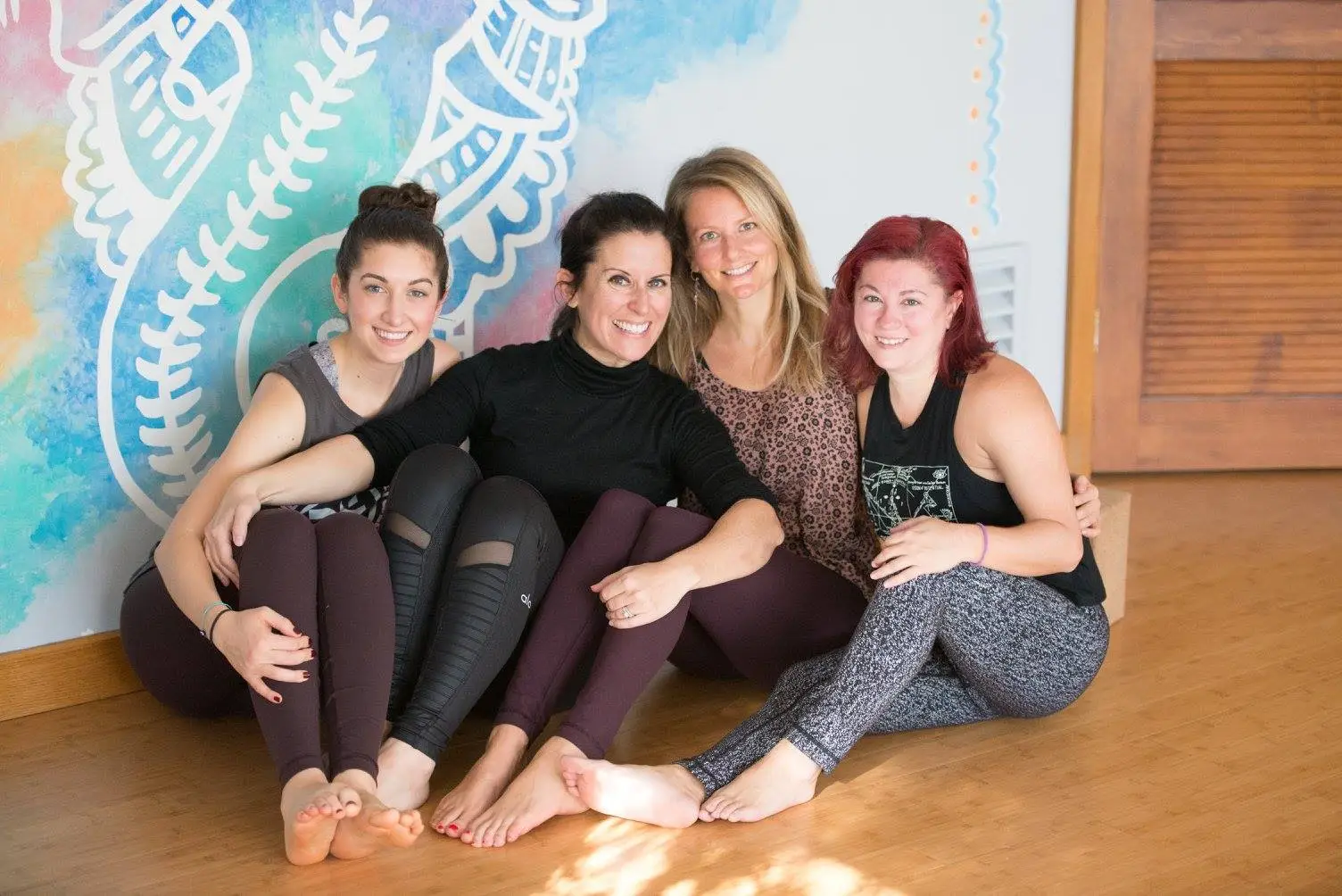
One of the greatest gifts yoga has given me is the understanding that there is no finish line.
For many of us, there is a moment when we believe we’ve arrived. We complete a teacher training, receive a certificate, begin teaching classes, or finish reading another philosophy book. It is tempting to believe these milestones mark the completion of something.
In my experience, they mark the beginning.
I’ve been teaching yoga for well over fifteen years. Along the way, my work has expanded far beyond leading weekly classes. Today I direct both 200- and 300-hour Yoga Teacher Trainings, design curriculum and continuing education for yoga teachers, mentor educators, lead workshops, and specialize in therapeutic private yoga for women recovering from breast cancer.
Over the years, my work has gradually shifted from simply teaching classes to designing learning experiences. I’ve become increasingly fascinated not only by what we teach, but by how people learn. How does understanding deepen? How do ideas take root? How do we create experiences that invite curiosity rather than simply deliver information? Those questions have become as meaningful to me as the practice itself.
And perhaps because of those roles, every few weeks I intentionally set them aside and become the student again.
Recently, my teacher gave me what seemed like a simple assignment: explore two ancient mantras associated with compassion and what many describe as the Divine Feminine. Research their historical origins. Understand the traditions from which they emerged. Learn how they have been practiced throughout history, and consider how they might be respectfully introduced into a modern yoga classroom.
On the surface, it was homework.
In reality, it became something much deeper.
It reminded me that yoga is not a body of information to master. It is a living tradition that continues to reveal itself over time.
Like many yoga teachers in the West, my education has been broad, thoughtful, and deeply meaningful. I have studied anatomy, philosophy, meditation, sequencing, pranayama, restorative yoga, subtle body practices, and the great philosophical texts that continue to shape my teaching today. Every one of my teachers has offered gifts that only they could offer.
That is one of the beautiful realities of yoga.
Every teacher spends a lifetime illuminating a different part of the path.
No single training, teacher, or lineage can encompass all of yoga’s richness.
There is something extraordinary, however, about remaining with one teacher over many years.
As both teacher and student continue to evolve, the conversation evolves with them.
A common language begins to develop. Less needs to be explained. Questions become more thoughtful. The same text you’ve read for years suddenly reveals something entirely new—not because the text has changed, but because you have.
The texts remain the same.
The mantras remain the same.
We do not.
The longer I practice, the less interested I become in accumulating information and the more interested I become in cultivating understanding. I’ve discovered that wisdom rarely arrives all at once. Instead, it unfolds slowly, often returning us to familiar teachings with entirely new eyes.
This experience has also reshaped the way I think about teacher training.
There is a common misconception that a 200-hour certification is the culmination of one’s yoga education.
I believe the opposite is true.
A teacher training doesn’t make us experts; it gives us the language to ask better questions. The real education begins in the years that follow.
Our role as teachers is not to possess every answer. It is to remain curious enough to keep learning, humble enough to reconsider what we think we know, and courageous enough to allow our understanding to evolve.
The goal of teacher training isn’t to produce teachers with all the answers. It’s to cultivate teachers who know how to keep asking thoughtful questions.
India has long been a meeting place of diverse religious and philosophical traditions. While yoga’s roots are deeply embedded in Hindu thought, it has also been practiced, interpreted, and appreciated by Buddhists, Jains, Sikhs, and even some Muslim mystics over many centuries. That historical richness doesn’t diminish yoga’s origins—it highlights the remarkable ways traditions can learn from one another while preserving their own identities.
Perhaps that is what lifelong study truly is.
Not collecting more techniques.
Not earning another certification.
Not proving how much we know.
But becoming a little more curious.
A little more discerning.
A little more humble.
As I begin exploring these ancient mantras over the coming weeks, I don’t do so because I believe I’ve discovered something new. I do so because I have the privilege of continuing to study with a teacher who gently reminds me that there is always another layer waiting to be uncovered.
Whether you are considering your first teacher training, have recently graduated, or have been teaching for decades, I hope you’ll remember this:
Yoga is not a destination.
It is a lifelong relationship with curiosity.
And perhaps that is the practice.






