
If you’re dealing with a tight lower back or stiff hips, walking into a yoga studio for the first time can feel a little intimidating. Which class do you pick? Will it make things worse? What if you can’t do half the poses?
At Inlet Yoga in Manasquan, we hear these questions all the time, especially from Shore locals who spend their days at a desk, behind a wheel, or on their feet at work and end up with a back that just won’t loosen up. The good news is that yoga for back pain in Manasquan, NJ, can genuinely help, but only if you’re in the right class. Here’s how to pick one, what to expect walking in, and how to talk to your instructor so your first class actually helps instead of hurts.
Why Class Choice Matters When You’re Dealing with Back Pain
Not every yoga class is built the same way, and that matters a lot more when your back or hips are already sore. A fast-paced, high-intensity vinyasa class might feel great to a regular practitioner, but if you’re tight and inflamed, all that movement can aggravate things before you even get to the poses that would actually help.
On the flip side, a slower class that holds poses longer gives your body time to actually release tension in the hips and lower back instead of just moving past it. That’s the whole idea behind matching your class type to what your body needs right now, not just picking whatever’s next on the schedule.
One thing we often notice is that many students come in believing their lower back is the main problem. After talking through their daily routine and watching how they move, it becomes clear that tight hips, limited mobility, or long hours of sitting are often contributing to the discomfort. Choosing a class that addresses those areas can make yoga for back pain in Manasquan, NJ, a more comfortable and productive experience overall.
Yoga Styles at Inlet Yoga That Help Most
Yin Yoga — Best for Deep Hip and Low Back Release
Our Yin Yoga class is built specifically around the connective tissues of the hips, pelvis, and lower spine, the deeper structures that don’t get much attention in faster-paced classes. Poses are held for several minutes at a time, which gives tight areas the chance to actually soften instead of just getting a quick stretch. If your back pain is tied to tight hips (which it very often is), this is usually the class we point people toward first.
The class also asks for quiet before, during, and after practice, so if you’re looking for something meditative on top of the physical release, this fits that too.
Gentle or Restorative — Best for Beginners or Flare-Ups
If you’re newer to yoga altogether, or you’re in the middle of a flare-up and everything feels sensitive, our Rest and Gentle or Restorative classes are a good starting point. These lean on props like bolsters and blankets to support your body in fully relaxed shapes, so there’s very little strain involved. It’s less about stretching hard and more about letting your nervous system and muscles calm down.
We’ve seen that students dealing with occasional back discomfort often gain confidence more quickly when they begin with slower, supportive classes. Starting at a comfortable pace allows them to learn proper alignment and become familiar with modifications before exploring more active styles.
Slow Flow — Best Once You’re Ready to Build Strength
Once your back pain has settled and you’ve got some mobility back, a slower-paced flow class (something like our Prana Flow or Morning Energizer Vinyasa) can help rebuild the core and back strength that keeps pain from coming back. The idea is to layer in strength once flexibility and irritation are under control, not before.
If you’re not sure which of these fits where you’re at, our Beginner’s Guide walks through the intensity levels, or you’re welcome to call the studio, and we’ll point you in the right direction.
What to Expect in Your First Class
What to Bring and Wear
Comfortable clothes you can move in, a water bottle, and a mat if you have one (we have mats and props on hand if you don’t). For a Yin or Restorative class, especially, you might want a light layer since your body cools down during the longer holds.
Many first-time students are surprised by how approachable the class feels. It’s common to arrive feeling nervous about flexibility or experience, but most people quickly realize that yoga is less about performing poses perfectly and more about moving in a way that feels comfortable for their own body.
Talking to Your Instructor About Back Pain Before Class
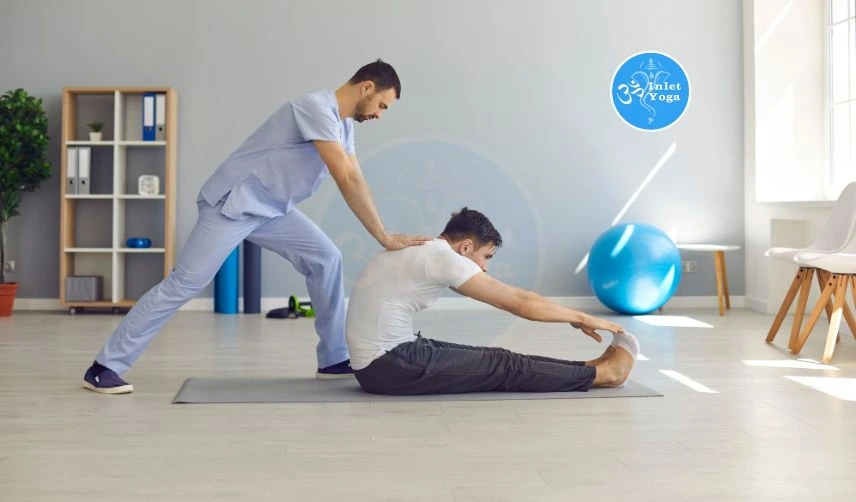
This is the step people skip and shouldn’t. Get to the studio a few minutes early and let your instructor know you’re dealing with back pain or tight hips before class starts. You don’t need to give a full medical history, just enough that they know to offer you modifications during certain poses. Our instructors build this into how they teach anyway, but a heads-up means they can check in with you specifically during class.
Instructors frequently encourage students to focus on how a pose feels rather than how it looks. Small adjustments, extra support from props, or skipping a movement altogether are normal parts of practice. Listening to your body is often more beneficial than trying to match everyone else in the room.
Modifications You Can Ask For
Don’t be shy about asking for blocks, straps, or a bolster, or about skipping a pose entirely if something doesn’t feel right. A good instructor would rather you modify than push through pain. Things like using a block under the knee in a hip opener, or a blanket under the hips in a reclined twist, can make a big difference in how a pose feels on a sore back.
Final Thoughts
Choosing the right yoga class can make a real difference when you’re dealing with back pain. From our experience at Inlet Yoga, students often feel more comfortable and confident when they begin with a class that matches their current needs rather than pushing themselves into something more advanced. Whether that means starting with Yin Yoga, Gentle Yoga, Restorative Yoga, or a private session, the goal is to move in a way that feels supportive and sustainable.
If you’re unsure where to begin, don’t worry. Let your instructor know how you’re feeling before class, ask questions, and take advantage of modifications when needed. As a local Manasquan studio right in the heart of the Jersey Shore community, our goal at Inlet Yoga is to make yoga for back pain in Manasquan, NJ, approachable, helping you build confidence at your own pace and develop a practice that supports your mobility and overall well-being over time.
FAQ
What yoga class is best for beginners with back pain?
Start with a Gentle or Restorative class, or Yin Yoga if your pain is tied to tight hips. Both are low-intensity and use props to support your body, so there’s minimal strain while you get used to the poses.
Do I need to tell the instructor about my back pain?
Yes, and it only takes a minute. Arrive a few minutes early and let them know before class starts so they can offer modifications and keep an eye on you during poses that might need adjusting.
How much does a first class cost at Inlet Yoga?
New students can try 5 Classes for $49 through our New Student Offer. It’s a good way to sample a few different class types before committing to a membership.
Is Yin Yoga or Restorative Yoga better for back pain?
Yin Yoga works best if your back pain is tied to tight hips, since it holds poses longer to release the connective tissue around the hips and lower spine. Restorative Yoga is gentler and better suited to flare-ups or beginners who want a fully supported, low-effort class.
Can I do yoga if my back pain is from a herniated disc or sciatica?
Gentle styles like Yin, Restorative, or a private session can help, but you should get clearance from a doctor first and tell your instructor about the diagnosis before class. Certain forward folds and twists may need to be skipped or modified.
What should I avoid doing in yoga if I have lower back pain?
Avoid deep, unsupported forward folds, fast-paced vinyasa flows, and any pose that causes sharp or shooting pain. Mild stretching discomfort is normal; pain that radiates down the leg or feels sharp is a sign to back off.
How soon can I expect back pain relief from yoga classes?
Some people feel looser after their very first class, but consistent relief usually takes 2 to 4 weeks of practicing once or twice a week. Yin Yoga in particular tends to show results gradually since it works on connective tissue, not just muscle.
Do I need to be flexible to start yoga for back pain?
No. Tight hips and limited flexibility are actually the most common reasons people start yoga in the first place. Classes like Yin and Gentle are built for exactly this, with props to support you wherever your body is right now.
What’s the difference between taking a class and doing yoga at home for back pain?
A class gives you real-time feedback and modifications from an instructor who can see how your body is moving, which matters most when pain is involved. At-home practice is a fine supplement once you know which poses and modifications actually work for you.






