
Seasonal Yoga helps you flow with the seasons through mindful movement and breath, supporting health, balance, and inner harmony.Ayurveda gives us a sacred map—one that has guided practice for generations. We’re taught to harmonize with the elements: to counteract the dryness and mobility of Vata with grounding, to stir the sluggishness of Kapha with fire, and to cool the intensity of Pitta with softness and surrender. In theory, Pitta season asks for heart openers, hip releases, and soothing practices that invite more lunar energy when we are imbalanced.
Why Is the 200 Hour Yoga Teacher Training the Best Start for Aspiring Yogis?
For many aspiring yogis, starting yoga is like opening a book written in a language they do not yet understand. The poses, techniques, and flow of practice can feel overwhelming, leaving beginners unsure how to begin or if they are progressing correctly. This confusion often leads to doubt and slow growth, making it hard to feel capable on the mat.
A 200 hour yoga teacher training program offers clarity and direction. It breaks down the fundamentals into practical, manageable steps, helping beginners build confidence, develop essential skills, and create a solid foundation. Understanding how this program sets the stage for success explains why it is the perfect start for anyone ready to grow as a yogi.
1. Building a Solid Foundation in Yoga Practice
The 200 hour yoga teacher training program provides aspiring yogis with a strong foundation in the essential principles of yoga. Beginners often struggle with alignment, breathing, and understanding the purpose behind poses, which can slow their progress. Through structured guidance, the program introduces postures, breathing techniques, and the philosophy of yoga in a systematic way, helping students establish a confident practice. Learning the fundamentals correctly from the start prevents common mistakes and allows beginners to grow with clarity and focus. This solid foundation is why the 200 hour yoga teacher training remains the best starting point for anyone serious about developing both skill and understanding in yoga.
2. Comprehensive Understanding of Yoga Philosophy
Beyond physical practice, the 200 hour yoga teacher training program immerses aspiring yogis in the rich philosophy behind yoga. Understanding the deeper principles of yoga helps beginners see beyond the poses, giving their practice purpose and direction.
The program covers the history of yoga, its ethical principles, and the connection between mind, body, and breath. Beginners learn how yoga extends into daily life and how the teachings can guide both self-practice and teaching others.
Through guided discussions, reflective exercises, and practical application, students develop insight into how yoga principles inform movement and mindfulness. This knowledge equips them with the tools to approach practice with intentionality rather than guesswork.
The combination of philosophy and practice ensures that beginners are not just performing poses but engaging in a holistic approach that supports long-term growth. The 200 hour yoga teacher training makes this understanding accessible, structured, and practical, giving aspiring yogis a clear path forward.
But what happens when theory meets reality?
This past transition into Summer 2025 was anything but typical. The Northeast weather surged in heat and dropped unpredictably in chill. Our internal experience echoed that disarray—some days felt stagnant, others volatile. Following a strict seasonal “prescription” in these moments can feel like wearing the wrong skin. As practitioners and teachers, we’re called to honor not only the ancient seasonal logic but the actual lived moment.
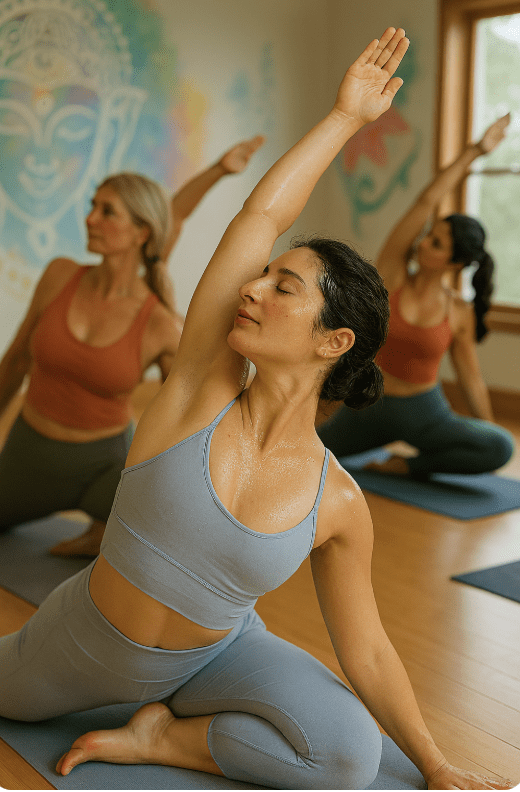
Lately, I’ve noticed that deep twists (Revolved Triangle Pose – Parivrtta Trikonasana, Revolved Side Angle Pose – Parivrtta Parsvakonasana or Half Lord of the Fishes Pose – Ardha Matsyendrasana)—often avoided in Pitta season due to their heating nature—have felt essential. My students are asking for them, my own body craves them. And here’s why I believe they’re working: as Ali Cramer has taught me, it’s not just what you do, but how you do it.
If fire is built slowly, methodically, from the inside out—rather than dumped on from the outside in—twists can serve as tools of transformation rather than aggravation. When we layer them with grounding, include longer holds, emphasize breath and containment, we turn sharp heat into steady flame. We allow Pitta’s drive for precision and truth to find structure, rather than eruption.
So yes, we can honor the tradition. But we must also trust our presence. When imbalance shows up as anger, frustration, irritation, and stagnation—it may not be pacified by stillness alone. Sometimes, we need to metabolize before we restore—effort before ease.
This is where yoga becomes a living practice—an ever-listening, ever-adjusting conversation between the elements around us and the elemental wisdom within.
Final Thoughts
Seasonal Yoga adapts poses and breathing to each season, boosting immunity, restoring balance, and keeping your body energized naturally.